
Flag Etiquette - what to do and why
A senior and well loved Club member once remarked that flag etiquette observed by Nelson boat owners was amongst the worst he had ever seen. It’s true to say that many people misunderstand what they are supposed to do and when. We hope this brief article is helpful in this respect.
Ensign
The ensign indicates the nationality of a vessel and is “worn” as close to the stern of the vessel as possible. This is a mandatory legal requirement under the Merchant Shipping Act.

The Red Ensign is the correct national maritime flag for British civilian vessels unless you are entitled to wear a special ensign (such as the White Ensign worn by Royal Yacht Squadron vessels).
The Ensign must be worn during daylight hours and particularly when when sailing in foreign waters and entering or leaving a foreign port. You can be prosecuted for breaking the rules!
Question: should you hoist your ensign in the morning (a ceremony known as Morning Colours, usually at 0800 in the summer and 0900 in the winter) and lower it at night (a ceremony known as Sunset or Evening Colours when conducted at 2100 if sunset is later) ?
Answer: We can find no evidence that this practice is compulsory, many people these days do not do so. However, if you are berthed at a Yacht Club whose members are required to observe these ceremonies, it is courteous to follow their example.
Lowering or hoisting the ensign on a short staff is not really practicable, so it is widely accepted that the staff may be removed, with the ensign attached, and stowed for the night. Wrapping the ensign around the staff is untidy and not recommended.
Burgees
A burgee is a distinguishing flag of a recreational boating organisation, and usually in the shape of a pennant.. Officers of the club (Flag Officers) are entitled to fly a swallow-tailed burgee denoting their rank.
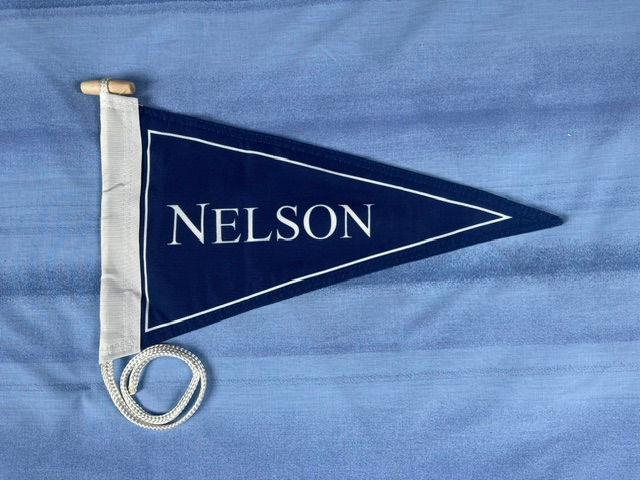
Members of yacht clubs such as the Nelson Boat Owners Club
may fly their burgees any time while under way or at anchor.
These should be flown on the port spreader, leaving the starboard
spreader free for courtesy and signalling flags.
Courtesy flags
In most cases a courtesy flag is the national flag of the country being visited. It should be flown from the starboard spreader (never at the masthead) whilst sailing in foreign territorial waters.

Q flags
The yellow Q flag should be flown on the starboard spreader below the courtesy flag when entering foreign waters or when returning to UK waters from abroad. It signals that your ship is “healthy” (free from communicable diseases).

It should only be lowered once Customs and Immigration have
formally granted the vessel clearance to enter the country.
Disclaimer:
The above information has been compiled in good faith by the authors, however it should be treated as informal advice and should not be considered exhaustive.
Authors:
Paul Gamsa & Sonia James


Comments